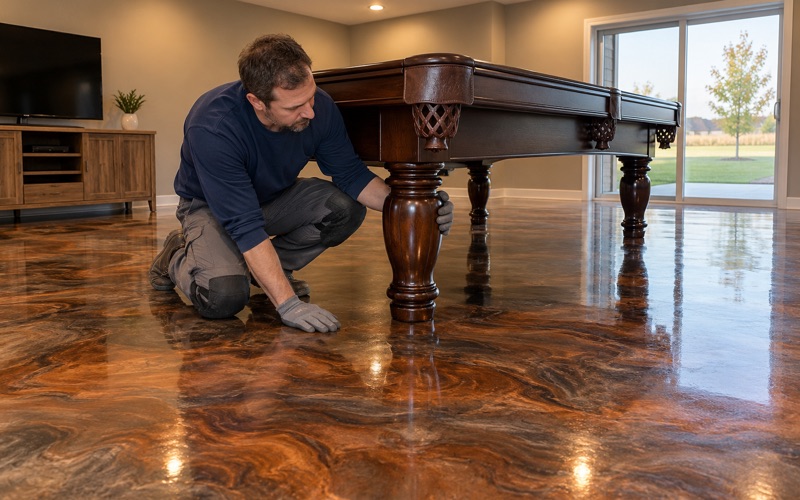
Ankeny Epoxy Flooring has done garage floor coating in Des Moines for more than 20 years, and in this city the slab is often under a rental rather than under the owner’s own car. The work is the same at its core: open the slab, test it, coat it to a written scope. What changes here is why the owner is calling and what the finished floor has to show.
A rental in this city needs a business license, and that license follows an inspection of the building. Basement, laundry, stair and hallway floors are part of what the inspector walks across. We coat those floors as well as garages, and we are careful about what a coating can and cannot promise in that setting.
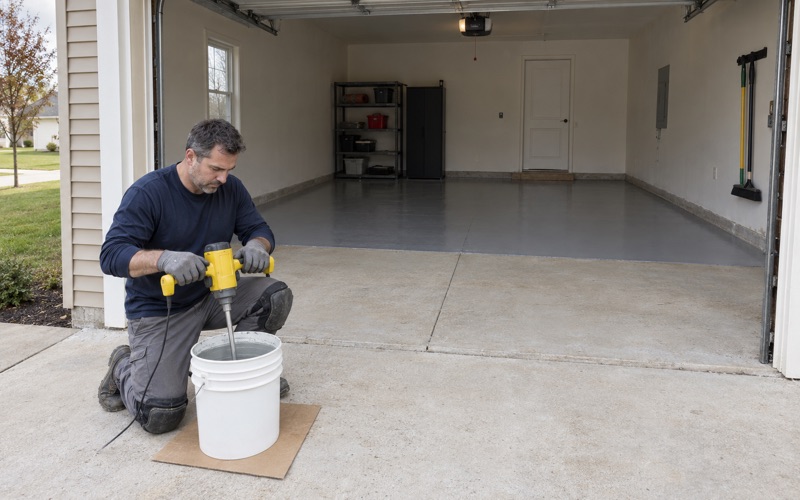
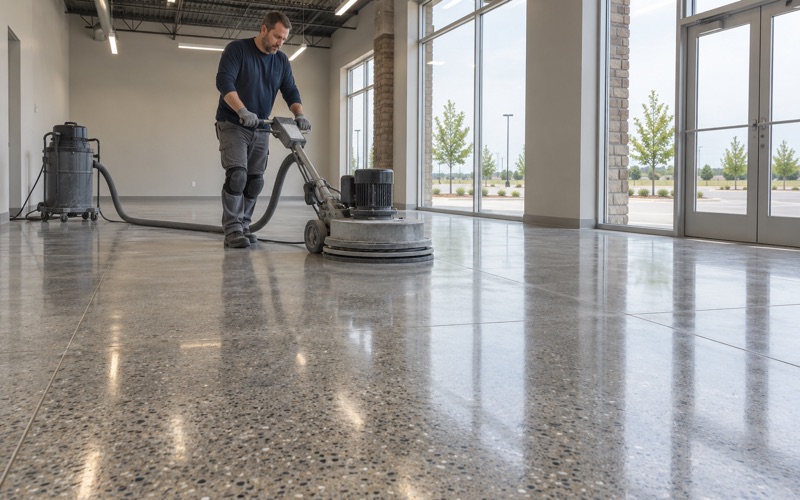
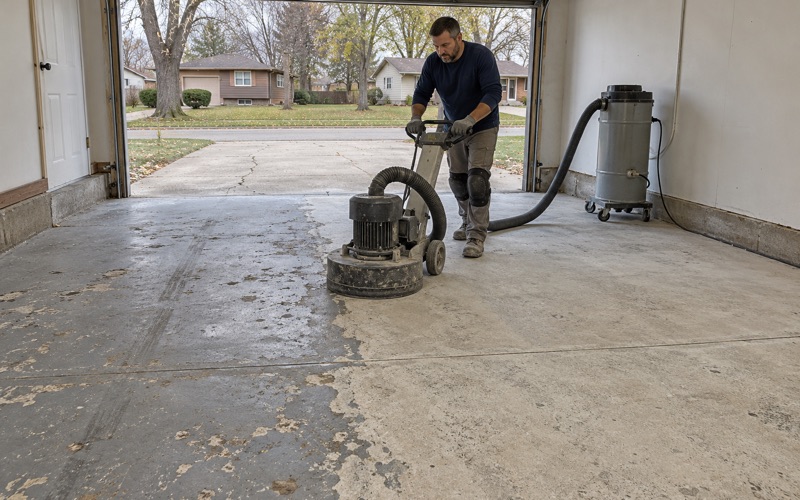
Every slab we take on is opened with a diamond grinder or a shot blaster instead of an acid etch. A moisture test goes into the written scope before the price is set, and the proposal names the product line, coat count and finished thickness so an owner can hold the floor up against the quote.
A Des Moines Rental License Starts With an Inspection
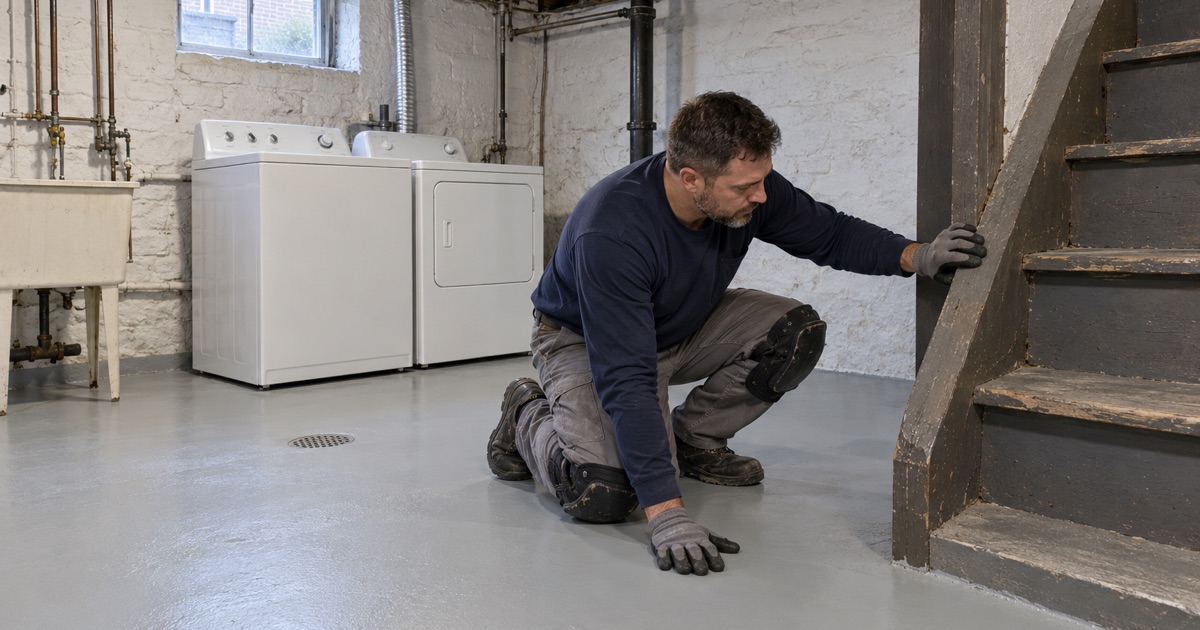
What Chapter 60 asks of an owner
Every residential rental in Des Moines needs a rental business license under Chapter 60 of the municipal code, the Housing Code. The city repealed and replaced that chapter with Ordinance 16,392, effective February 1, 2025, and the new version adopts the 2021 International Property Maintenance Code with a handful of sections deleted.
The license is not a form you file and forget. Section 60-32 says it issues upon an approved application and the property passing a rental inspection, and the owner is expected to request it at least 90 days before anyone moves in. The Neighborhood Inspection Division, part of the Neighborhood Services Department, does that inspection.
Who walks the building
Under Section 60-33 the inspector looks at each rental structure, any accessory structures and the premises around them. In a duplex or a small apartment building that means the basement, the shared laundry, the stairs and the halls as well as the units themselves.
We have no relationship with the city or its inspectors, and nothing on this page should be read as one. What we can do is coat a floor soundly and tell an owner plainly where the coating helps and where the real issue is somewhere else in the building.
Planning around the 90-day window
Because the request is due 90 days ahead of occupancy, floor work on a newly acquired rental fits best early in that window. A coated basement or laundry floor needs time to cure before washers, storage and foot traffic go back on it, and we would rather schedule around the inspection date than race it.
Chapter 60 also keeps a seven-member Housing Appeals Board under Section 60-40. Anything that goes there is between the owner and the city. Our part ends at a floor in good repair and a written record of what was done to it.
Looking for epoxy-flooring closer to Grimes? See Grimes Epoxy-Flooring.
How the Violation Count Sets the License Term
From 3.5 years down to 9 months
Section 60-35 ties the length of the license to what the first inspection finds. A one- or two-unit rental with no violations on first inspection receives a term of 3.5 years, and a building of three or more units with a clean first inspection receives 2.5 years.
Violations shorten it. A one- or two-unit rental with up to 8 violations per unit drops to 2.5 years, while buildings of three or more units with a limited number of violations fall to 1.5 years. Beyond those counts, the term is 1.5 years for the smallest rentals and 9 months for buildings of three units or more.
Why floors show up in the count
A shorter term puts the owner back in front of an inspector sooner, and that is the practical reason a floor can matter to a rental owner here. For mid-sized buildings Chapter 60 counts violations per unit and in the common areas, so a worn stair or a broken-up laundry floor is more than a cosmetic note.
We say this carefully. A coated floor does not decide an inspection, and it does not lengthen a license on its own. It removes one possible defect from a list that also covers plumbing, heat, electrical, foundations and much else, and the inspector is the one who judges all of it.
Renovated and new rentals
Section 60-35 also sets fixed terms for newly constructed or renovated rental structures: 2.5 years for apartments and 3.5 years for single-household homes and duplexes. An owner finishing a renovation may have the basement or garage floor open anyway, and that is the cleanest moment to grind and coat it.
Permit questions come up in renovations too. When Des Moines adopted the 2021 codes through Ordinance 16,317, it deleted the model code’s list of work that skips a permit, and we know of no city list that replaces it. We tell owners to ask the Permit and Development Center before treating any floor job as permit-free, and a slab replacement is permit work.
What Chapter 60 Says About Floors, Stairs and Common Areas
Interior surfaces and Section 60-102
Chapter 60 has no floor-coating rule, and we never describe a coating as something the code requires. It reaches floors through general maintenance standards. Section 60-102 says all interior surfaces shall be kept in good repair and good condition, and that cracked or loose plaster, decayed wood and other defective surface conditions shall be corrected.
A basement slab spalled into loose patches, or a laundry floor under flaking old paint, is the kind of surface an owner should expect that language to reach. The same section says peeled, flaked and chipped paint shall be repaired, removed or covered, which matters on floors painted decades ago without any preparation.
Walking surfaces under Section 60-64
Section 60-64 reads: every stair, ramp, landing, balcony, porch, deck or other walking surface shall be maintained in good condition and good repair. Basement stairs with worn concrete treads, the landing at the bottom of them and a garage step into the house are all walking surfaces in the plain sense of the words.
On concrete stairs we grind the treads and nosings, repair chipped edges, and finish with a broadcast texture chosen for grip. The slip resistance comes from the specific broadcast and topcoat we name in the proposal, not from a slogan, and a finished stair still has to be judged by the inspector who walks it.
Common areas in multi-unit buildings
Section 60-101 asks owners of multi-unit structures to keep common areas clean and sanitary. Des Moines has a lot of those buildings: the 2020-2024 American Community Survey counts 10,421 housing units in buildings of 20 to 49 units and 7,942 in buildings of 50 or more.
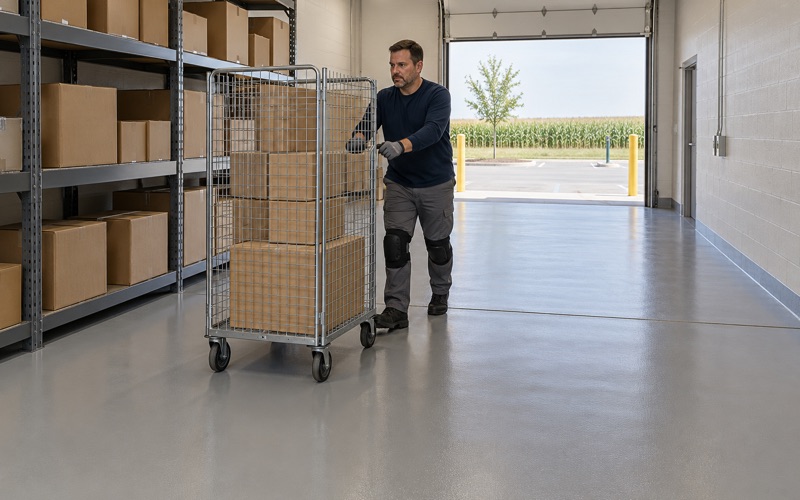
Bare concrete in a shared corridor, trash room or laundry soaks up spills and holds dirt in its pores. A coated floor gives the people who clean it something they can actually mop, and in an occupied building we phase the job by floor or by wing so residents keep a route through.
Pre-1940 Basements, Garages and What a Coating Can Do
Older rental stock
Des Moines is Iowa’s capital and its most populous city, incorporated in 1851 as Fort Des Moines. Its housing reflects that age: 26.7 percent of units were built in 1939 or earlier, and 39.5 percent of households rent, according to the same Census survey.
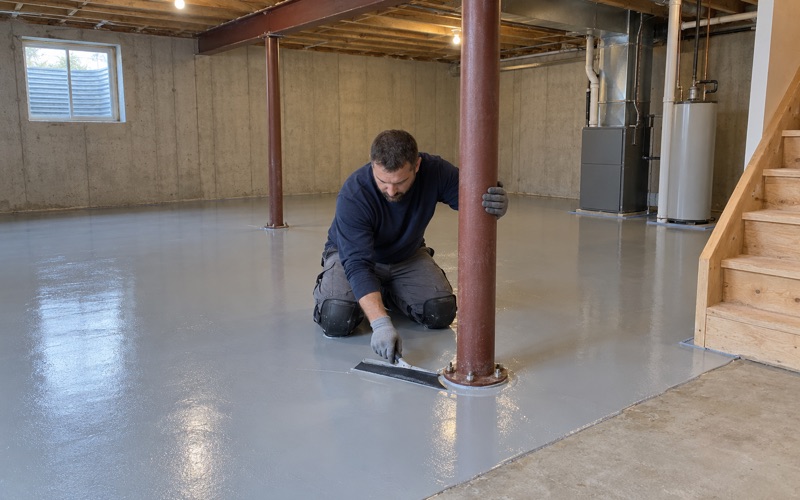
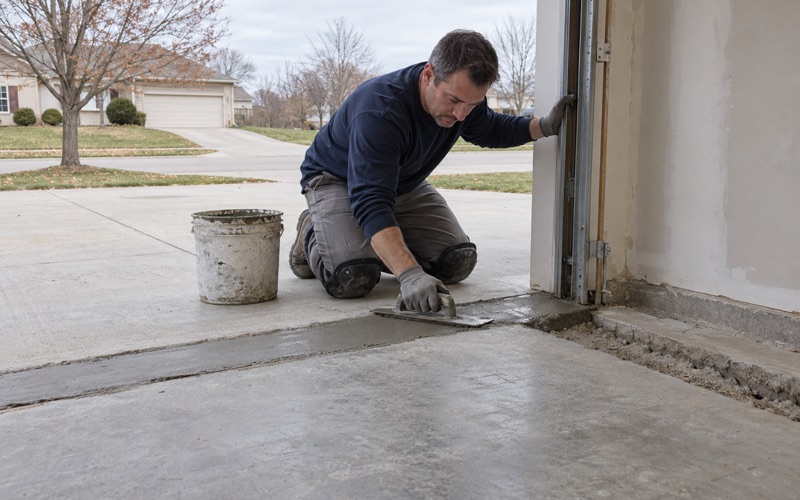
In those older buildings the basement often holds the laundry, the furnace and the water heater on a slab that has been patched more than once. We map cracks, spalls and old coatings before quoting, and we say so when a slab needs repair or replacement before it should be coated at all.
Basement laundry rooms and water
A basement laundry floor gets read for past water before anything else. We check the sump pit and the drain tile where they exist, look for efflorescence and old tide lines, and run an ASTM F2170 relative humidity probe or an ASTM F1869 calcium chloride test as the scope calls for.
Some neighborhoods west of downtown sit on sewers the city described in 2010 as installed nearly 100 years ago, and heavy rain in 2008 backed them up into basements. A coating does not stop seepage or a sewer backup, so we work around floor drains, backwater valves and sump pits, and only after the source of the water has been dealt with.
Nor is a coating radon work. In Iowa radon testing and mitigation require a state credential under Iowa Code chapter 136B, which we do not hold, and an owner with a radon question needs that specialist rather than a flooring crew.
Garage floors on rental property
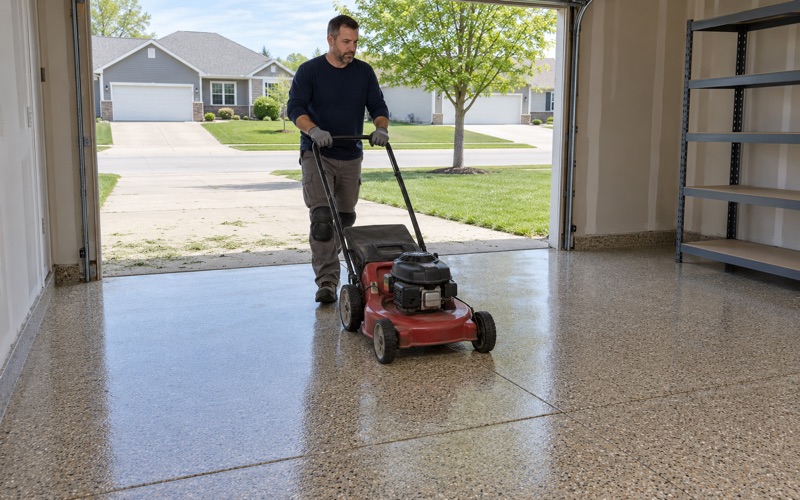
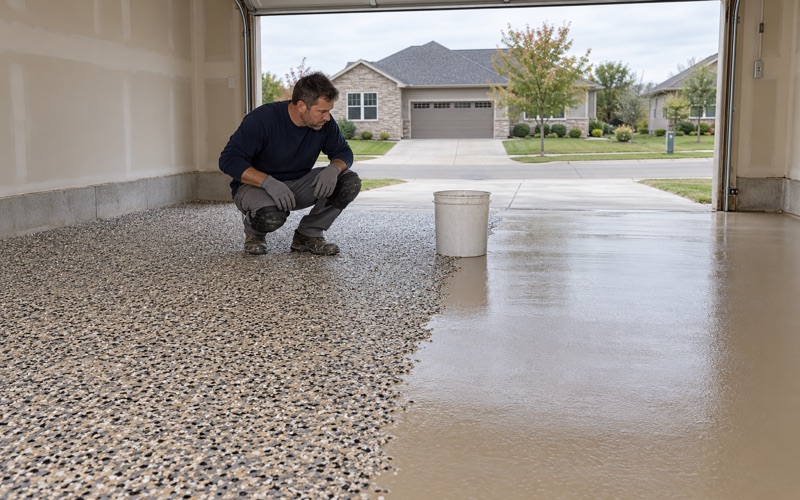
Plenty of Des Moines rentals are single homes and duplexes, many with a garage, and that is where our garage floor coating work comes in. We grind to a measured ICRI concrete surface profile, apply a 100% solids epoxy base, broadcast vinyl flake and finish with a polyaspartic topcoat, adjusting the system to what the moisture test shows.
Grinding dust is captured at the machine by a vacuum, not rinsed toward a floor drain. Low-odor products are available for attached garages and basements under occupied units as a comfort choice, and before any job is sold we explain what the warranty excludes, starting with moisture.
If you own a rental in Des Moines and an inspection is on the calendar, call us early. We will look at the basement, laundry, stair, hall and garage floors, tell you which ones a coating would genuinely improve, and put the rest in writing as work for someone else.
- 20+ Years on Concrete
- Moisture Tested Before Pricing
- Ground, Never Acid Etched