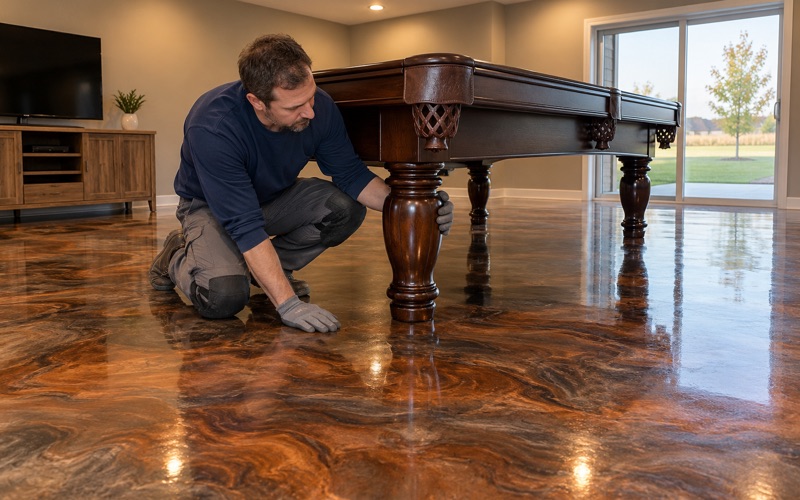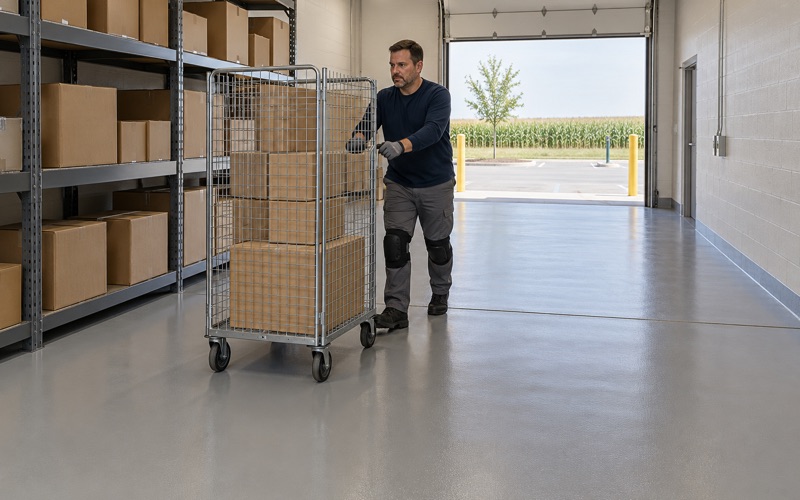
Ankeny Epoxy Flooring has spent more than 20 years on epoxy flooring in Indianola and across central Iowa, and the jobs that teach the most are the ones with a date nobody can move. When a building has to reopen on a set morning, the floor is usually the last trade standing between the crew and the keys. We plan those floors backward from that morning, not forward from the day we arrive.
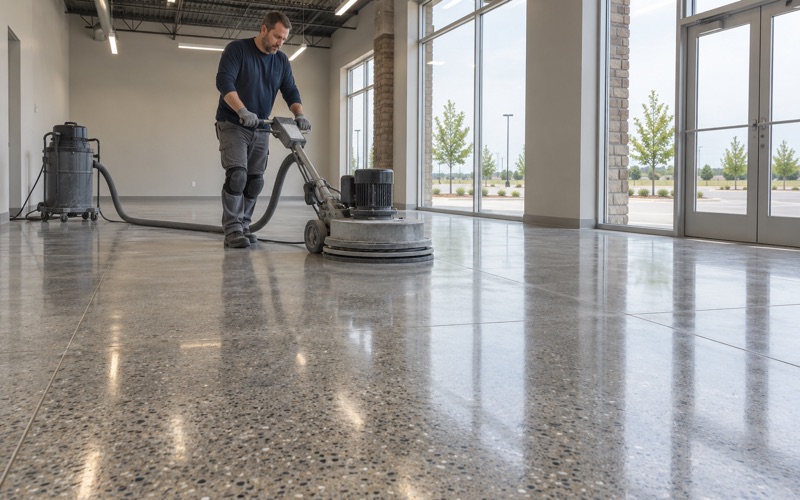
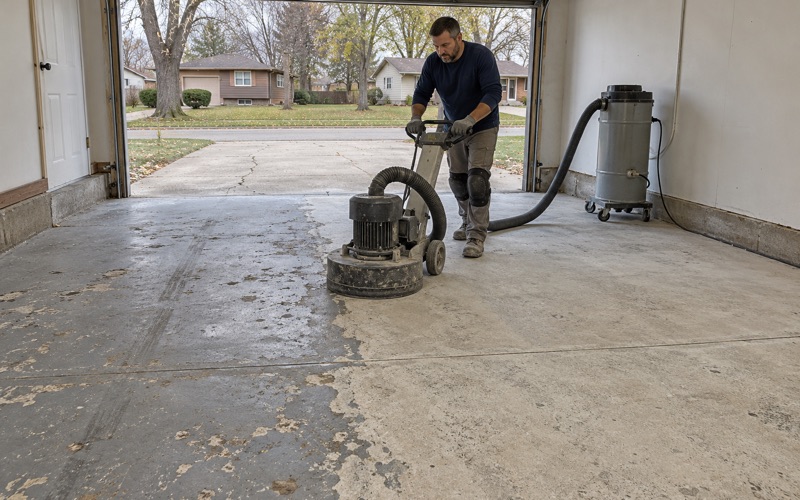
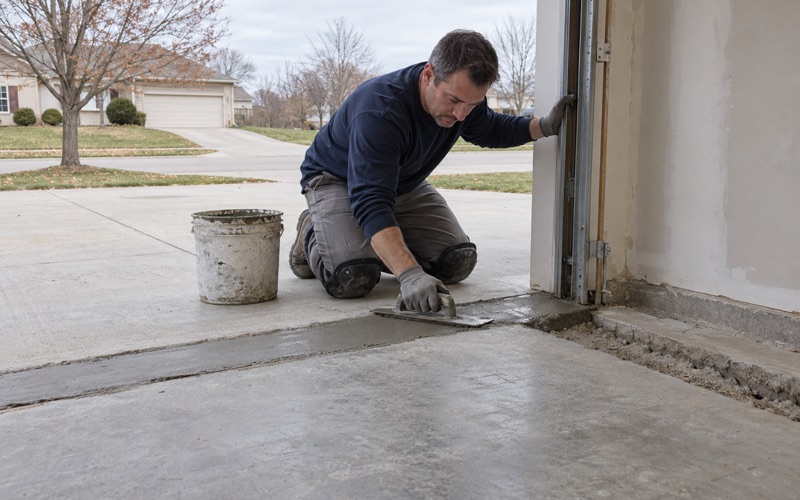
That calendar discipline starts with the slab itself. Before a price is final, our written scope includes a moisture test, and the slab is opened with a diamond grinder or a shot blaster rather than an acid etch so the coating has a true profile to bond to. Cracks, spalls and any old coating get mapped first, and if the concrete needs repair before it should be coated, we say so in writing.
The proposal names the product line, the coat count and the finished thickness, so whoever signs off on the floor can check it against the quote. That matters most when the person accepting the work has a reopening date on the wall and no time for a second visit. The rest of this page walks through how a fixed reopening shapes the work here.
Simpson College closed Pfeiffer Dining Hall for a semester
What the renovation covers
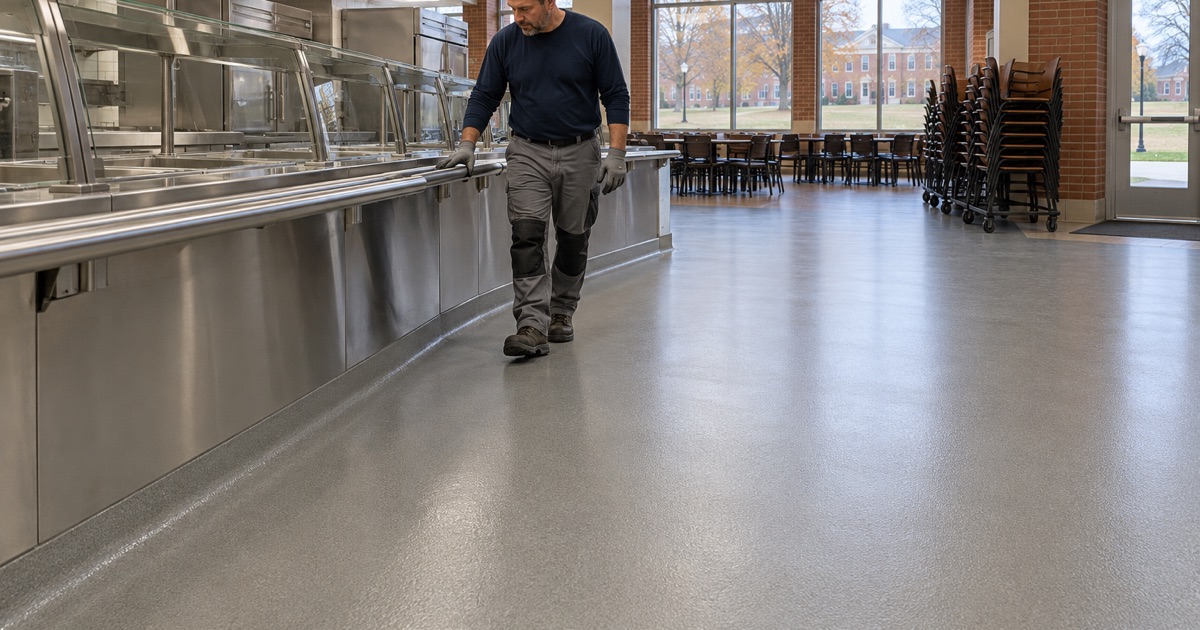
Simpson College, founded in 1860 as the Indianola Male and Female Seminary, announced in September 2025 a combined $10 million renovation of Pfeiffer Dining Hall and the Great Hall. The college’s release said work would begin in November and be completed in fall 2026, with redesigned serving stations and flooring listed among the updated furnishings. The student paper, The Simpsonian, added an updated kitchen area with more equipment space, new seating and counters, and a new outdoor patio.
What makes the project useful to anyone planning floor work in Indianola is the shape of it, not the finishes. The paper reported the dining hall closed for the entire spring semester, with completion expected by August 2026. We have no connection to Simpson College, its builder or its dining operator, and we do not know what floor material the college chose.
A whole building out of service
Most of our commercial work is phased around a business that keeps running, with overnight and weekend windows carved out of a live schedule. A closed building flips that problem. There is room to work and nobody walking the floor, but there is also one date at the end that does not slide, because students and staff arrive whether the finishes are ready or not.
In that setting the floor competes with every other trade for the same months. Serving stations, counters and seating usually go in after the floor, so a coating that runs late pushes everything behind it. We treat the floor as a dependency other crews are waiting on, and we write the schedule that way.
Floors under an older room
The college’s release says the Great Hall keeps its wooden ceiling beams, bay windows and antique lighting. Rooms like that change how floor prep runs. Grinding dust is captured at the machine with a vacuum instead of being rinsed toward a drain, and that matters even more when the surfaces overhead are the ones a renovation is trying to protect.
Edges need the same care. Before grinding starts we mask wall bases and any fixed woodwork near the floor line, and the perimeter is finished with smaller hand tools rather than a full-size machine.
Looking for epoxy-flooring closer to Boone? See Boone Epoxy-Flooring.
A floor schedule set by the academic calendar
Counting backward from move-in
On a campus, the reopening date is fixed by the academic calendar, and every cure, recoat and return-to-service time has to land before it. We start with the day the building must be usable and work back through each step. Light foot traffic, furniture placement and equipment loads each get their own date, because a floor that is dry to the touch is not yet ready for a loaded serving cart.
Cure schedules follow slab temperature and the dew point spread at the surface, not the calendar alone. If a closed building has its heat turned down while trades work, a coating can cure far slower than the data sheet suggests. We ask early whether the space will be conditioned during the work, because that answer can move the finish date by days.
Choosing a system for the window
The calendar also shapes which product makes sense. A 100% solids epoxy builds thickness well but asks for longer recoat and cure intervals, while polyaspartic and polyurea topcoats can return a floor to service much sooner. On a tight window we often pair an epoxy base with a faster topcoat, and the proposal states which coats go down and how thick the finished floor will be.
Fast systems carry their own risks. Amine blush can form on an epoxy coat that cures in cool, damp air, and a topcoat laid over it may not bond. Our crews check for it before every recoat rather than trusting the clock, since a failed layer discovered in July costs more time than the check ever does.
Testing the slab before the window opens
Central Indianola sits on dissected till plain soils, with Sharpsburg silty clay loam on most slopes, plus poorly drained Clearfield and somewhat poorly drained Macksburg and Lamoni where the seasonal water table rises close to the surface. Slab moisture there is tested, not assumed. We use ASTM F2170 in-situ relative humidity probes or ASTM F1869 calcium chloride tests, and a high reading leads to a moisture-mitigation primer or a different plan.
The test result belongs in the schedule, too. A slab that needs a mitigation primer adds a step, and finding that out in week one leaves room to absorb it. We also say plainly what a coating warranty excludes, and moisture vapor transmission is the first exclusion we name. A floor coating does not stop water coming up through a slab.
Kent Campus Center carrying a semester of extra meals
Where the meals went
While Pfeiffer was closed, The Simpsonian reported that food service moved to the Kent Campus Center, the 55,000-square-foot building that already holds SubConnection, Tyler’s Grille and Millie’s. The Black Box Theater was named as extra seating. That put a full semester of meals through a building that also carries the rest of campus life.
We did not work in either building, and we make no claim about how those floors held up. The pattern is still worth noticing for any Indianola building owner. When one space closes for floor work, the traffic it carried goes somewhere, and the floors in that temporary space take a heavier share than usual.
Planning for the overflow space
If your project moves people into another room for a season, that room deserves a look before the closure starts, not after. A worn coating in an overflow space can fail under the extra traffic just as the main floor is curing. We can inspect both floors in one visit and tell you whether the temporary space needs a recoat first.
A recoat on a sound epoxy floor is usually a short job: the old surface is abraded, cleaned and given a fresh topcoat. Where the old coating is peeling or the slab underneath has moved, a recoat only hides the problem, and we say so before anyone signs.
Traffic, texture and cleaning
Dining traffic means spilled drinks, dragged chairs and carts rolling the same path over and over through a day. We specify slip resistance by the broadcast and topcoat used, such as a quartz aggregate broadcast under a clear topcoat, rather than promising it as a slogan. The texture is a balance between grip underfoot and how easily a crew can mop the floor at closing.
Summer, winter break and semester closures on a small campus
Matching the job to the window
A residential college offers a few kinds of windows, and each fits a different scope. A winter break can be long enough for a recoat or a small room, while summer suits full removal and a new system across several spaces. A full semester closure, like the one at Pfeiffer, is the rare case where an entire building can be reworked at once.
We size the scope to the window, not the other way around. If a full grind, repair and three-coat system cannot finish inside a break with cure time to spare, we would rather split the work across two breaks than rush a floor into service. Simpson’s own plan showed similar logic, starting work in November and keeping the dining hall closed through the spring semester.
Booking before the break, not during it
Break windows fill early, because every trade on a campus is chasing the same weeks. We like to see a building, map its cracks and old coatings, and run moisture tests well before the closure begins. That way the written scope, product line and coat count are settled while there is still time to order material and adjust.
Testing ahead also protects the reopening date. A slab that reads wet in a pre-closure test can be planned around with a mitigation primer, but the same reading on the first day of a short break may leave no good option. Early tests turn a surprise into a line item.
The same calendar in town
The academic calendar does not only govern campus buildings. Indianola is a college town, 30.1 percent of households here rent, and 52.7 percent of renters live in buildings of 10 or more units. For a landlord or building manager, the short gap between leases works much like a campus break.
The same rules apply in that smaller window. A common-area hallway or a garage floor in an apartment building gets the same grind, moisture test and written coat count as a dining hall, scaled to the days available. If the gap is too short for a proper cure, we tell you that before the work is booked.
Whether the deadline is a move-in weekend or a reopening a whole campus is counting on, we start every Indianola project the same way. Tell us the date the floor has to be in service, and we will build the schedule back from it.
- 20+ Years on Concrete
- Moisture Tested Before Pricing
- Ground, Never Acid Etched