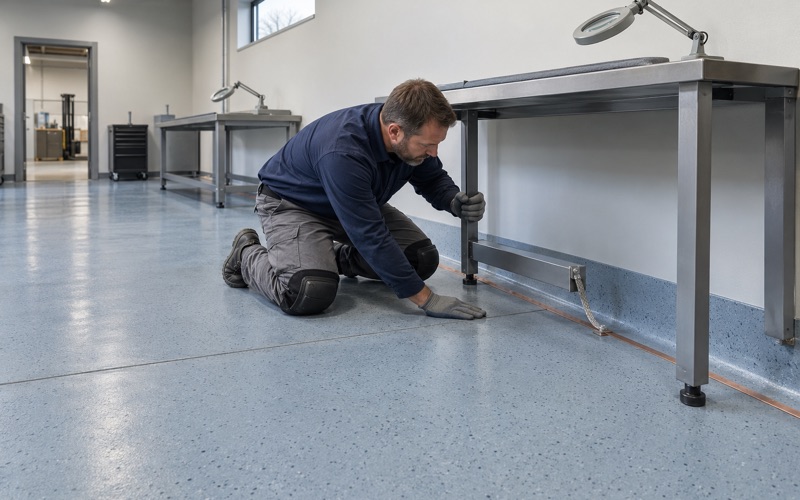
Ankeny Epoxy Flooring has spent more than 20 years on concrete, and our epoxy flooring in Newton starts with a question most quotes skip: what has this slab already lived through? A floor that held machinery, oil and an earlier coating needs different prep than a fresh pour. We open every slab mechanically, test it, and write down what we find before we price the work.
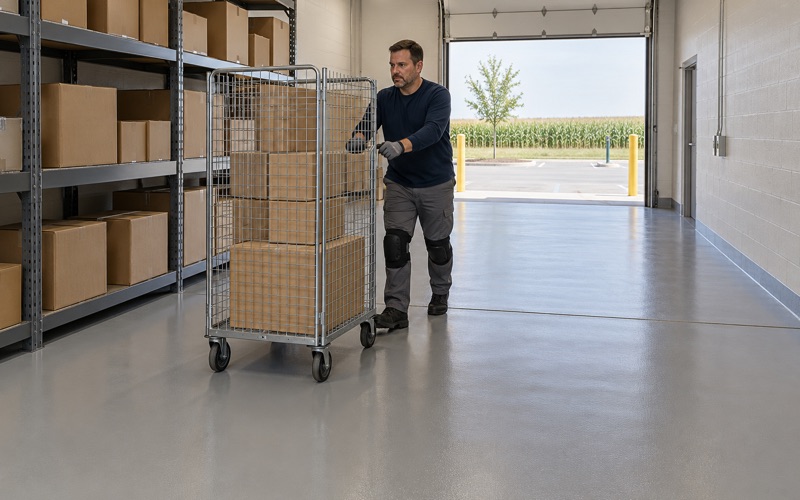
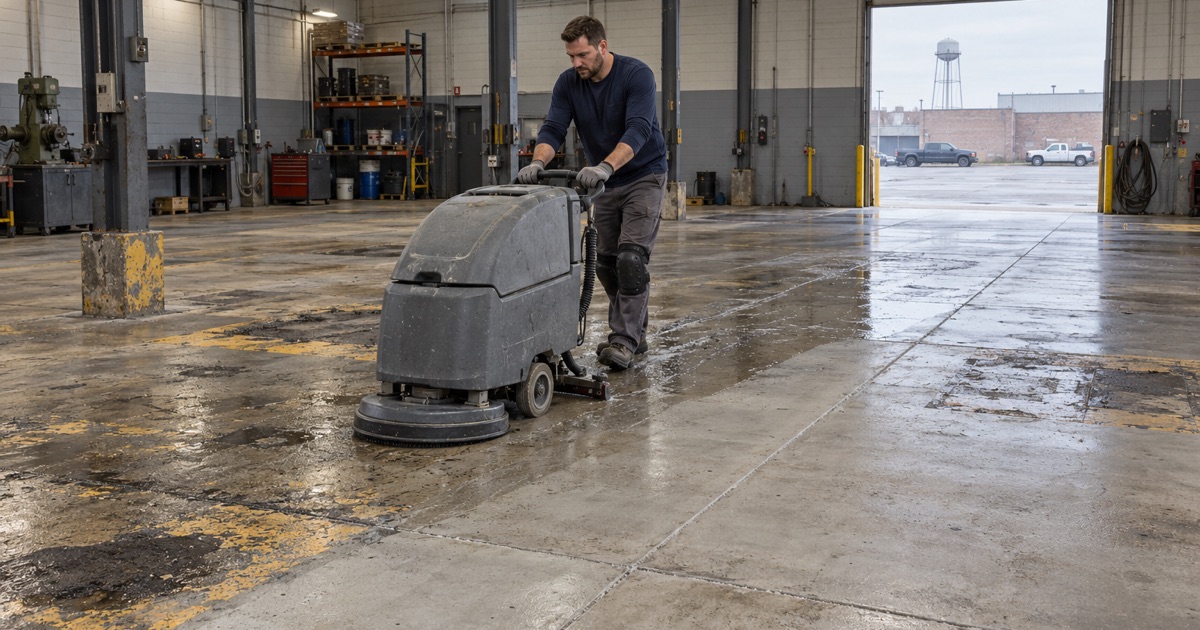
That approach matters on industrial floors, warehouse slabs and shop floors that are on their second or third tenant. Old plant concrete can look sound and still carry decades of absorbed oil that can push a new coating off the slab. Our crews degrease, grind with diamond tooling or shot blast, and pull adhesion tests on the actual slab before any system is chosen.
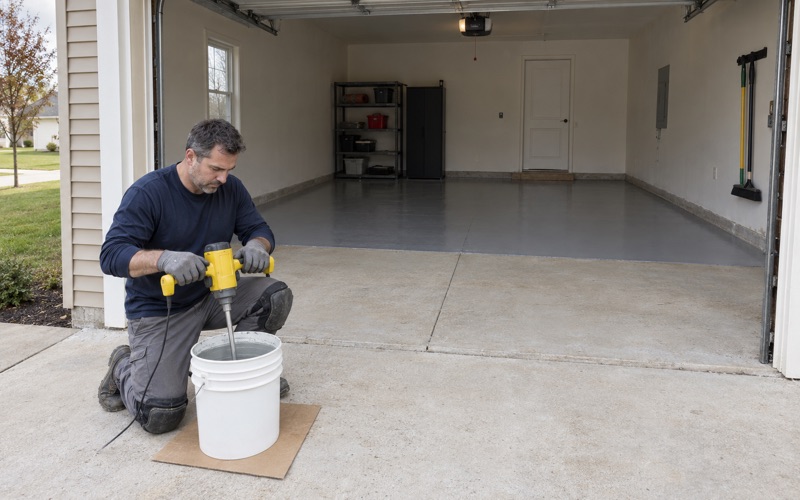
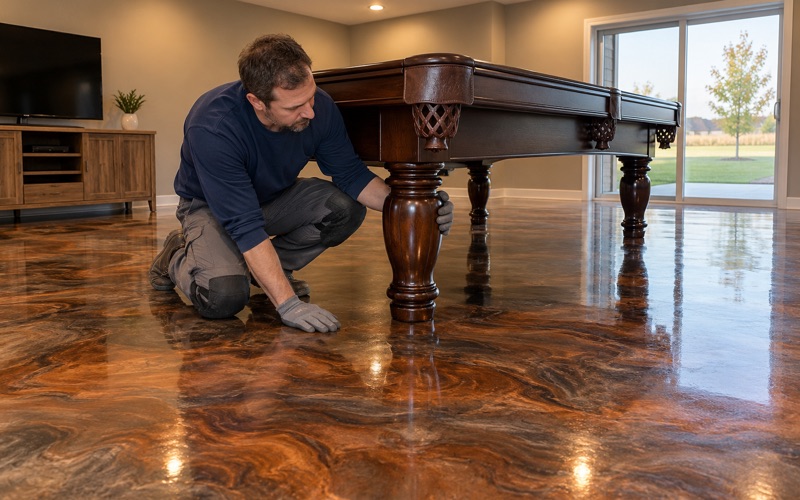
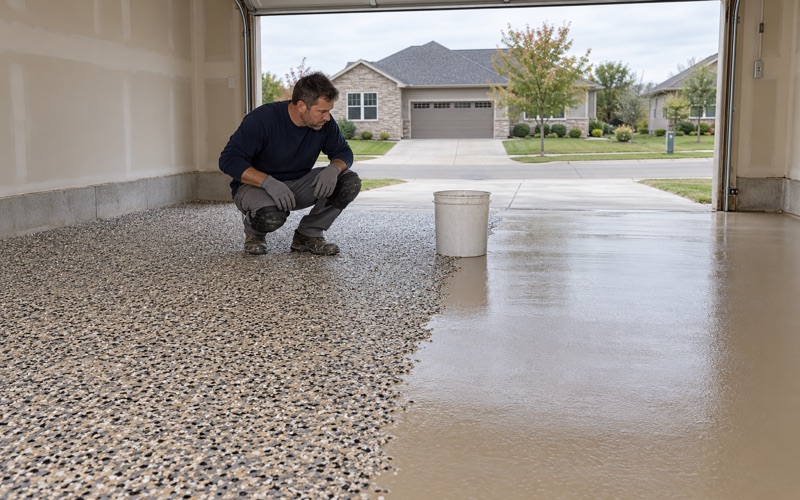
The same care goes into homes. A garage or basement slab gets a moisture test written into the scope before the price is final, and the proposal names the product line, the number of coats and the finished thickness. You can hold the finished floor up against the quote and check it.
What Maytag Left Behind in Newton
1.9 Million Square Feet of Second-Life Space
For nearly a century, Maytag was the largest employer in Newton, according to a 2009 EPA case study. When the Newton plant wound down between 2006 and 2007, it left 1.9 million square feet of manufacturing space, warehouses and other buildings on a 175-acre site. By 2008, 154 acres were ready for reuse.
That space did not sit empty. Trinity Structural Towers retrofit 300,000 square feet of the old plant and opened in 2009, the former headquarters campus went to DMACC and became Legacy Plaza, and the Jasper County Career Academy moved into a converted 30,000-square-foot Maytag building. Each of those floors was poured for one purpose and later put to another.
Why a Reused Floor Is a Different Job
A new owner of a reused plant floor often inherits concrete with no clear record. Nobody may know which bays saw solvents, which aisles were sealed, or where a pit was filled and patched. We treat that uncertainty as part of the scope instead of guessing around it.
On a walk-through we map cracks, spalls, joint failures and every patch of old coating, and we say plainly when a section needs repair or replacement before it should be coated. On a building that has changed hands, that map is often the first written account of the slab anyone has made.
Maytag Plant #1 and Its Environmental Covenant
One part of the old complex carries a formal record. Iowa DNR lists Maytag Plant #1, at 403 W 4th St N, as a closed Land Recycling Program site with VOC and waste oil contamination. It was issued a No Further Action certificate, and the institutional control on the property is an environmental covenant dated 2013.
That record is not just history. When DMACC developed part of the site further in 2023, the DNR notes that additional vapor and soil sampling followed under the covenant’s requirements. Disturbing the ground or the slab on a covenant parcel is a question for the property owner and the DNR first, and we ask it before we bring a grinder through the door.
We also want to be clear about what a floor coating is. It is a wear surface that does nothing about soil gas or old contamination, and we do no environmental work of any kind. If a parcel needs that, the owner’s environmental consultant leads, and our job waits until they say the slab is ready to be worked.
Looking for epoxy-flooring closer to Saylorville? See Epoxy-Flooring in Saylorville.
Oil-Soaked Plant Concrete: Degrease, Grind, Test
Pulling Oil Out Before Opening the Surface
Decades of machine oil and cutting fluid soak well below the surface of factory concrete. Grinding first can spread that oil across the fresh profile, so we degrease before the diamonds touch the slab. Heavily stained areas may take several cleaning passes, and we check each one before moving on.
A simple water-drop check tells us a lot at this stage. Where water beads instead of darkening the concrete, something is still in the pores, and that spot gets more cleaning or is cut out. We would rather spend an extra day on prep than come back to a peeling aisle.
Grinding to a Real Profile
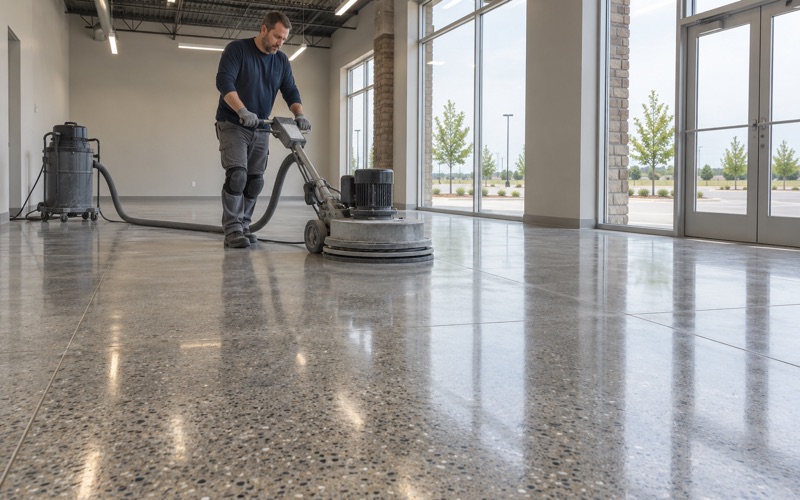
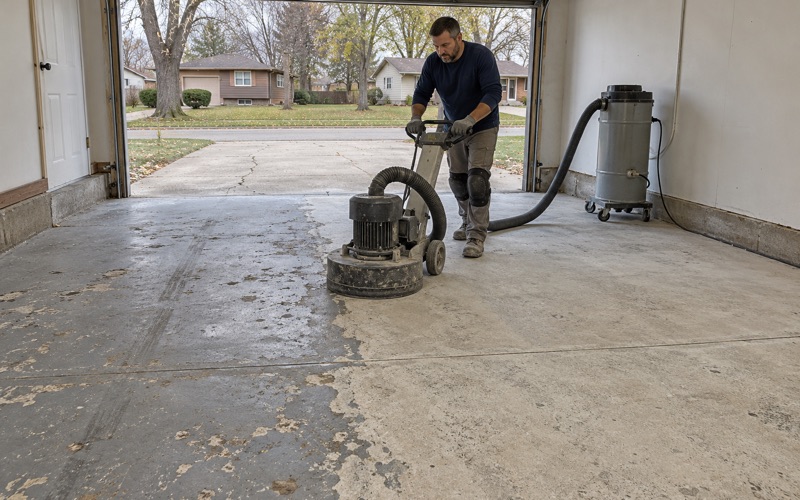
Every slab we coat is opened with a diamond grinder or a shot blaster, never an acid etch. Acid cannot cut through oil-darkened concrete evenly, and on old plant floors it can leave residue that fights the primer. Mechanical prep gives us a measurable ICRI concrete surface profile that matches the system we specify.
The dust from that work is captured at the machine with a vacuum, never rinsed toward a floor drain. On a reused industrial building, where nobody is sure what the old drains connect to, that habit matters more than usual. It also keeps the rest of an occupied building cleaner while we work.
Adhesion Testing Before We Commit
Once the slab is clean and profiled, we put down test patches of the intended primer and pull them after cure. A patch that comes away with concrete attached tells us the bond is stronger than the slab. A patch that peels clean tells us the oil is still winning, and we go back to prep.
We also run moisture tests here, using ASTM F1869 calcium chloride kits or ASTM F2170 in-situ relative humidity probes depending on the slab. Large old floors can vary from bay to bay, so we test in more than one spot. Those readings decide whether a moisture-mitigation primer belongs in the system.
Old Coatings and Phased Work on Factory Floors
Reading What Earlier Owners Left
A reused plant floor may carry two or three generations of paint, sealer and epoxy from earlier tenants. Some of it is well bonded and some of it is hanging on by habit. We test sections of old coating the same way we test bare concrete, and loose material comes off before anything new goes down.
In most cases we grind old coatings off entirely rather than trying to bond over them. A new system is only as strong as the weakest layer underneath it, and an unknown coating from decades ago is a poor foundation. Where removal is not practical, we explain the risk in writing before the job is sold.
Choosing a System for a Second-Life Floor
Once the slab is sound, we match the system to the new use rather than the old one. A fabrication bay may call for a thick 100% solids epoxy with quartz aggregate broadcast, while a light assembly or storage area may only need a densified and sealed floor. Where food is handled, urethane cement with coved bases is usually the better choice.
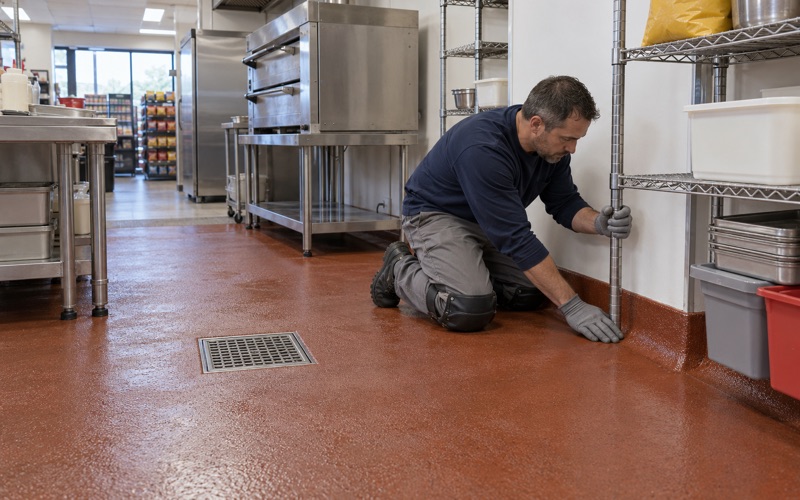
Food establishments in Jasper County are inspected directly by the Iowa Department of Inspections, Appeals and Licensing, and we plan those floors around the 2017 FDA Food Code that Iowa adopts. Slip resistance is set by the broadcast and topcoat we specify, not promised as a slogan. Coved junctures where floor meets wall are drawn into the scope from the start.
Working Around a Running Line
A building that has been put back to work rarely shuts down for a floor. We phase warehouse, plant and shop floors around shifts, coating one bay while the next stays in use, and we schedule overnight and weekend windows when a line cannot stop. Each phase is taped off, ground, coated and cured before traffic returns.
Cure timing follows slab temperature and the dew point spread at the surface, not the calendar. Big unheated bays in a central Iowa winter can sit too cold for epoxy to cure properly, and we will tell an owner to wait or to heat the space rather than rush it. A floor that cures badly shows amine blush and soft spots long after we leave.
Newton Homes: Older Houses, Garages and Basements
An Older, Owner-Heavy Housing Stock
Newton’s homes are older than many buyers expect. Census estimates show 44.3 percent of the city’s housing units were built before 1960, and 22.5 percent before 1940. Most are detached houses, and a majority are owner-occupied, so many of the slabs we see here are far older than the coatings people want to put on them.
Age alone does not decide anything, though. We test every slab regardless of the year the house was built, because a newer house is not automatically a safer garage. An older floor that has been dry for decades can outperform a recent pour that was never given a vapor retarder.
Basements: Water Comes First
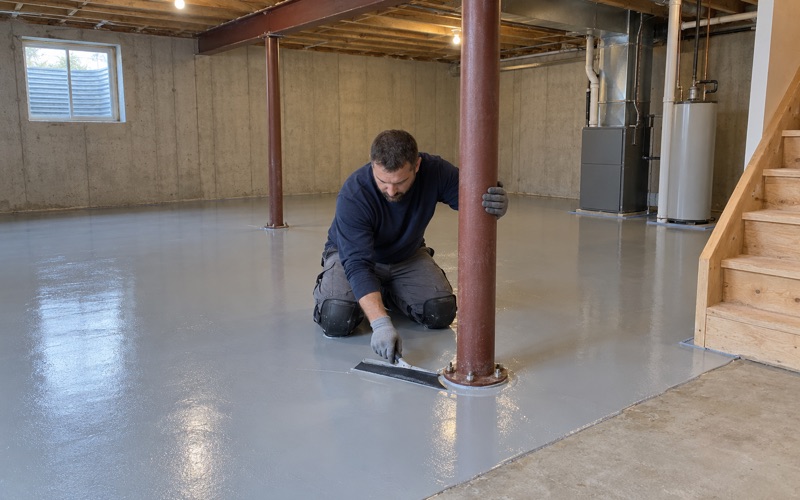
Before we quote a basement floor, we look for evidence of past water: efflorescence, tide lines on the walls, rust at the base of posts. We check the sump pit and the drain tile where a house has them, because a coating does not stop seepage. If water is coming through the slab, that problem gets solved before any epoxy goes down.
Newton saw significant street flooding in uncommon locations during the early July 2026 storms, when 2 to 4 inches of rain fell, according to the National Weather Service in Des Moines. Heavy rain like that is when a marginal basement shows itself. Our warranty terms name moisture as the first exclusion, and we walk through what the warranty leaves out at the first visit.
Garages, Salt and Low-Odor Options
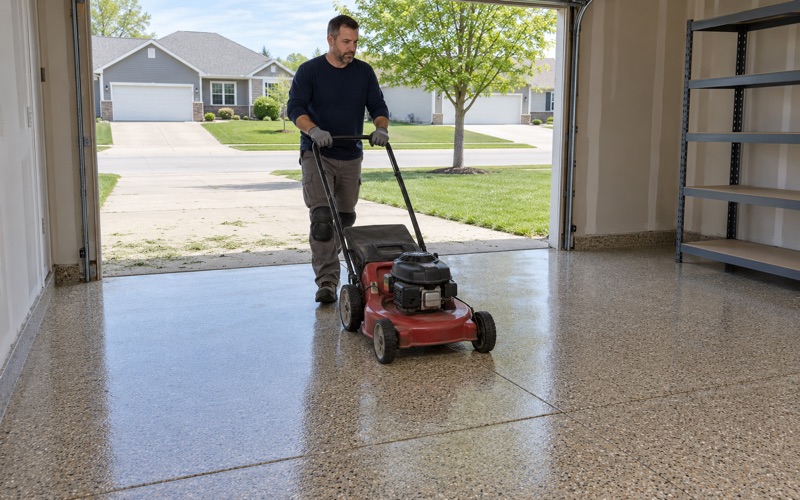
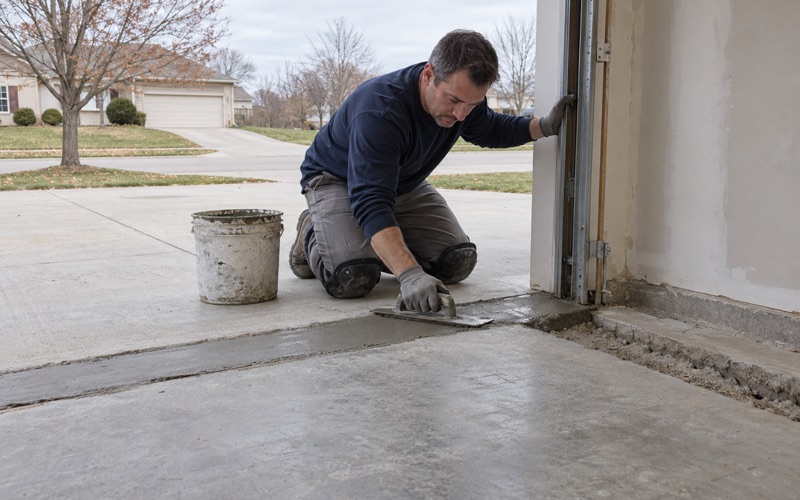
Newton garages take the same brine and rock salt that ride in on tires across central Iowa from November through March. We choose garage systems with that in mind, often a flake broadcast with a polyaspartic topcoat that resists salt and hot tire pickup. Older garage slabs with freeze-thaw scaling get repaired before they are coated.
For attached garages and basements, we offer low-odor products as a comfort and re-entry choice for the household. They are not a legal requirement in Iowa, and we do not sell them as one. Either way, the proposal spells out which product goes down and how long before you can walk on it.
- 20+ Years on Concrete
- Moisture Tested Before Pricing
- Ground, Never Acid Etched