Ankeny Epoxy Flooring has spent more than 20 years on epoxy flooring in Polk City and around central Iowa, and the garages we get called to here often have a boat sitting in them for half the year. That changes what a coating has to survive. The wear comes less from daily driving and more from wash water, scraped grit and the steady weight of a hull resting on stands.
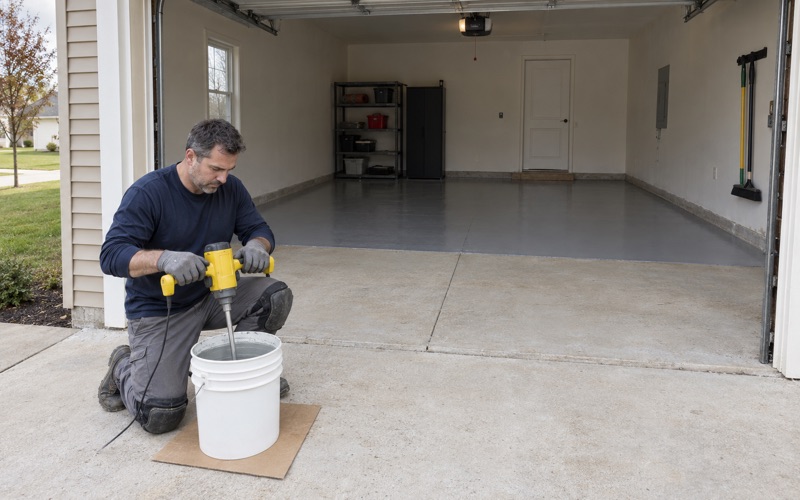
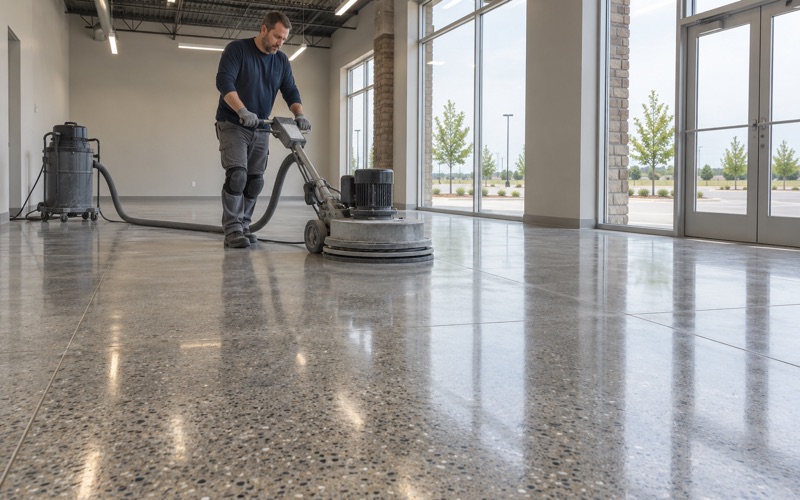
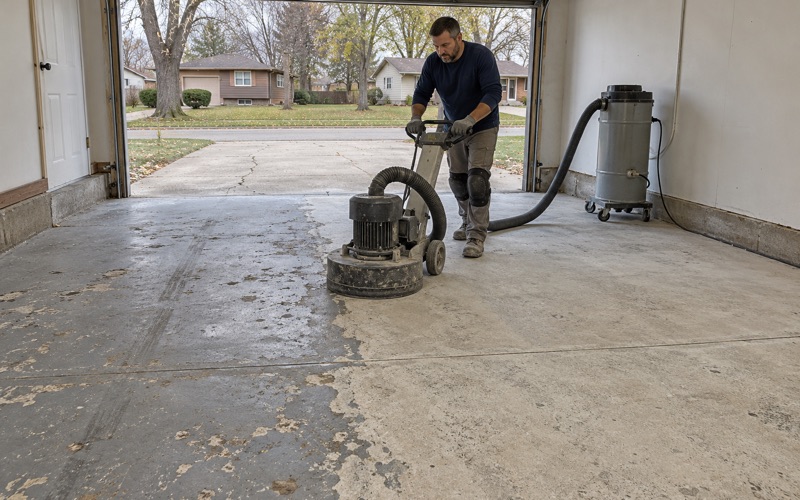
We start every job the same way, whatever the age of the house. The slab is opened with a diamond grinder or a shot blaster instead of an acid etch, a moisture test goes into the written scope before the price is settled, and the proposal names the product line, the coat count and the finished thickness so you can check the floor against the paperwork.
The sections below cover why boat storage in town changed in 2024, what the cleaning routine does to a floor, and how we pick a system built for it. If your slab needs repair before it should carry any coating at all, you will hear that from us first.
Zebra Mussels at Saylorville Lake and the Garage That Follows
What the DNR Confirmed in November 2024
On November 6, 2024, the Iowa DNR announced that zebra mussels had been confirmed on multiple boats in the Saylorville Marina area of Saylorville Lake. A survey crew did not find them. Concerned boat owners spotted them while pulling boats out for the winter, and the DNR said more monitoring would follow the next summer.
For a city bordered by Saylorville Lake on one side and Big Creek Lake on the other, that news landed close to home. Polk City addresses include the Saylorville Lake Marina on NW Polk City Drive, the Big Creek Marina on NW 142nd Avenue, and dry dock storage near the Big Creek State Park beach. Plenty of boats come off the water here every fall, and many of them end up in a garage or a shop.
Clean, Drain, Dry Lands on the Slab
The DNR’s Clean, Drain, Dry steps are simple to read. Remove plants, animals and mud before leaving the water. Drain the motor, live well, bilge, transom well and bait bucket. Then, before moving to another waterbody, spray the boat and trailer with hot or high-pressure water, or let the boat and equipment dry for at least five days.
Iowa law also requires boaters to drain all water before leaving an access and to keep drain plugs removed or open in transport, and the DNR asked owners to check boats, docks and lifts before winter storage. None of that mentions floors, and we want to be plain about it: a coating does nothing about zebra mussels and plays no part in the state’s rules. What we see is the practical consequence. When the inspecting, scraping, rinsing and drying happen at home, they happen on your concrete.
Why the Boat Sets the Design Load
About 89.1 percent of Polk City homes are owner-occupied, and most are detached single-family houses. In a house like that, the person choosing the garage floor is often the same person storing the boat. For a garage that holds a boat, that makes the boat routine, not the family car, the right thing to design the floor around.
The garage is also where a boat gets its winter look-over. Owners walk the hull with a scraper and a light, rinse the trailer, and leave hatches and the live well open to dry. Every one of those steps puts water or debris on the floor, and it happens again in spring before the boat goes back to the lake.
Looking for epoxy-flooring closer to Bondurant? See Epoxy-Flooring in Bondurant.
Hot Water, Pressure Washing and Hull Grit
What a Hot Rinse Does to the Wrong Coating
A hot or high-pressure rinse runs straight across the floor and pools wherever the slab sits low. A thin one-part garage paint or a water-based kit softens under hot water, and a pressure wand held close can lift it at any edge where adhesion was weak to begin with. Once water gets under a film, it keeps working that edge every time the boat is washed.
The systems we specify for this use start with a 100% solids epoxy base bonded to a mechanically profiled slab, within the ICRI CSP range the product calls for, and finish with a polyaspartic or polyurea topcoat chosen for hot-water and chemical resistance. That pairing is what lets a floor take a rinse-down and dry back out without blistering or peeling.
Scraped Shell, Sand and Mud Underfoot
Inspection means scraping. Whatever comes off a hull, along with sand and dried mud packed into trailer bunks and rollers, ends up on the floor and gets ground in by boots, a creeper and trailer tires. On bare concrete that grit dusts the surface, and on a soft coating it scratches through to the primer in a season.
A quartz aggregate broadcast locked under the topcoat gives the floor a harder wearing surface than flake alone. A full vinyl flake broadcast hides fine scratches and makes debris easy to spot and sweep. We talk through which build fits how hard the boat gets worked over in your space before anything is ordered.
Where the Rinse Water Goes
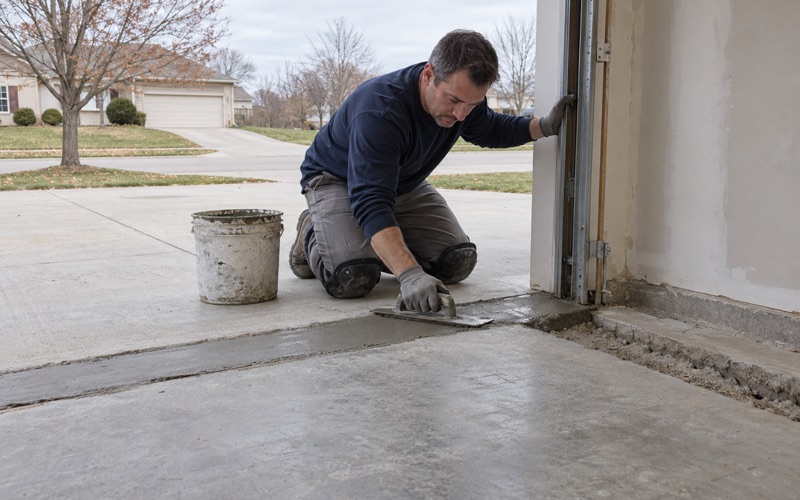
A coated floor sheds wash water faster than bare concrete, which mostly helps. We still deal with cracks before coating, because an open one is where rinse water reaches the slab underneath. A coating keeps water on top of the floor; it does not stop moisture rising through the slab from below.
That is also why moisture is the first warranty exclusion we name. Coating warranties typically leave out failures caused by moisture vapor transmission or hydrostatic pressure, and we explain those limits before the job is sold rather than after a problem shows up.
Months on Jack Stands: Point Loads Over Winter
A Stored Boat Is Not a Parked Car
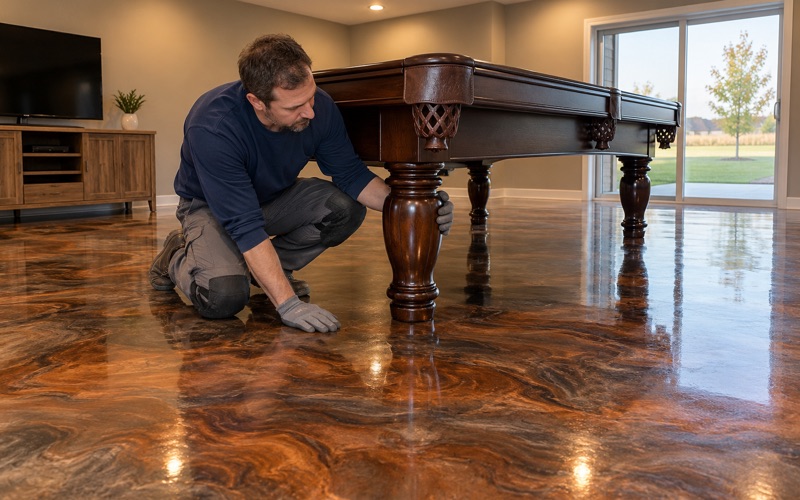
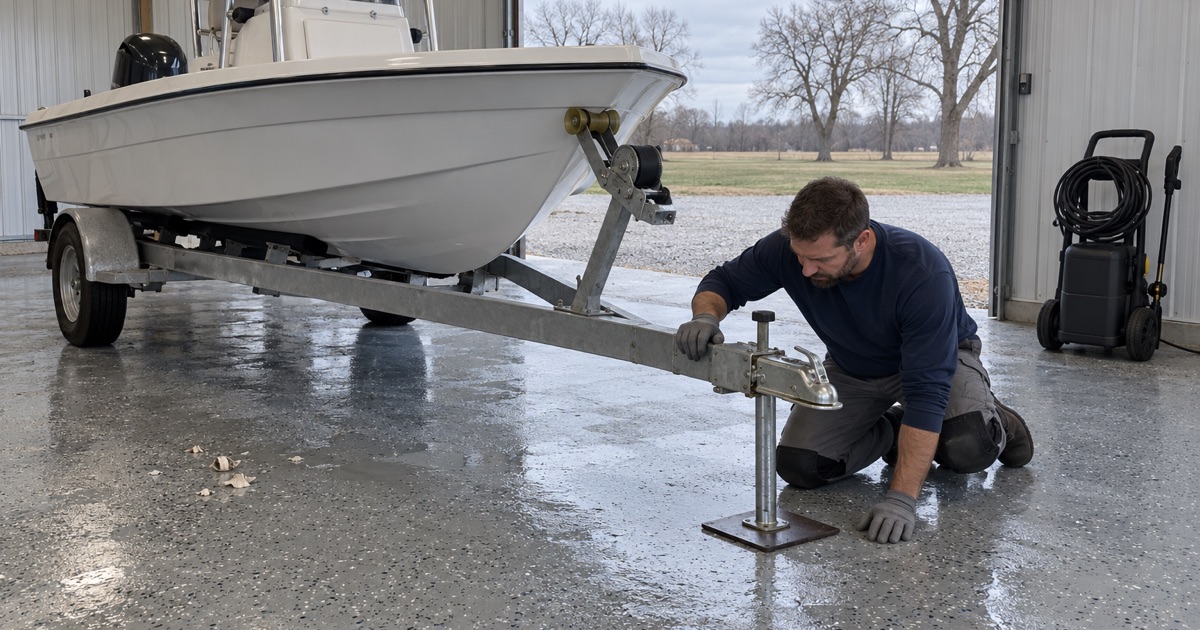
A car moves every day and spreads its weight over four tire patches. A boat on a trailer sits for months, and once it goes up on jack stands or rests on a tongue jack, the weight concentrates on a few small steel feet. That load never shifts, so any softness in the coating shows up as a dent or a ring pressed into the floor by spring.
Hot tire pickup is a related problem. Trailer tires that come home warm from the highway can lift a soft topcoat, and so can a vehicle parked in the next bay. The topcoats we use are selected to resist it, and the thickness written into the proposal is the thickness that has to carry the weight.
Protecting the Floor Under Stands and Jacks
Even a hard coating benefits from help under a steel foot. We recommend plywood or composite pads under jack stands and the tongue jack, and we point out where a thicker build is worth it in the bay where the boat lives. Supports should bear on sound floor, not on an edge or a control joint.
Before we coat, we map the slab for cracks, spalls and old coatings. A stand set over a cracked or hollow-sounding area can break the coating along with the concrete, so we tell you when a section needs repair, or when a slab should be replaced rather than coated.
Testing a Young Slab Anyway
Much of the housing here is recent, and it is tempting to assume a newer slab is ready for anything. We test it regardless of the year the house was built. ASTM F2170 in-situ relative humidity probes or an ASTM F1869 calcium chloride test go into the scope, and the result decides whether a moisture-mitigation primer belongs in the system.
If the readings come back high, we say so before the price is final rather than coating over the problem and hoping the warranty covers it. On a slab that tests dry, the same numbers become part of the record for the floor.
Choosing a System for a Lake-House Shop Floor
Matching the Build to How the Space Is Used
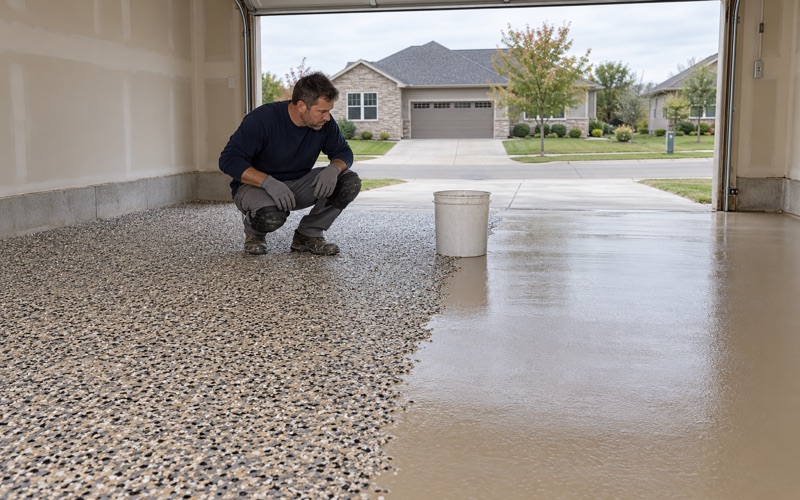
A garage that holds one runabout over winter and two cars the rest of the year needs a different build than a detached shop where a pontoon gets washed, serviced and stored. We ask how often the boat is rinsed indoors, whether hot water is involved, where the stands go and what else the floor carries. Then we size the base coat, broadcast and topcoat to those answers.
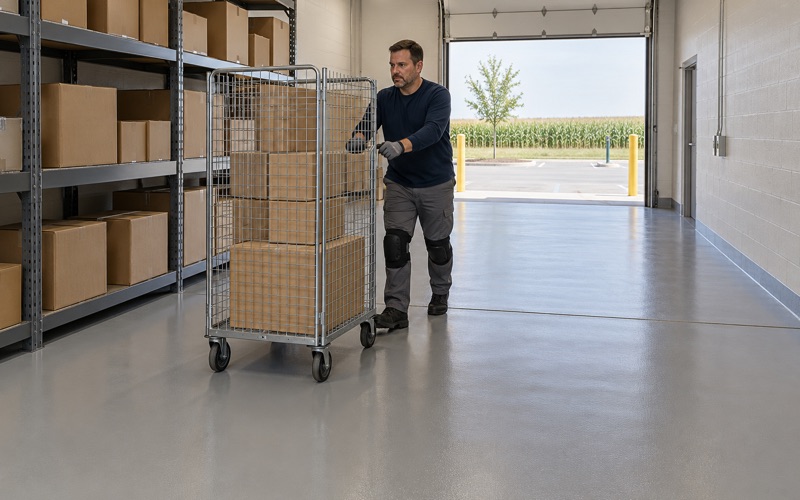
For most boat garages that means a ground slab, a 100% solids epoxy body coat, a full broadcast and a polyaspartic or polyurea topcoat. Where a shop takes heavy, frequent hot washing, urethane cement deserves a look, and we will say so when it is the better fit.
If the same space doubles as a workshop, we also ask about fuel, oil and solvent spills from engine service, since those affect which topcoat makes sense. A shop where outboards are winterized on the floor sees more of them than a garage where the boat only sits.
Grinding Clean, Not Rinsing Toward a Drain
In a town bordered by two lakes, washing grinding slurry toward a floor drain or out the door to a storm inlet makes little sense. We capture grinding dust at the machine with a vacuum. The slab is opened dry, profiled and ready for primer without a rinse.
Low-odor products are available for attached garages where fumes would otherwise drift into the house. That is a comfort and re-entry choice, and nothing in Iowa requires it.
Timing the Job Around the Boat
The easiest time to coat a boat garage is while the boat is still in the water or at a marina, so plan the floor before fall haul-out rather than after. The coating needs its full cure before a trailer rolls back in and the stands go down, and we set that schedule by slab temperature and the dew point spread at the surface, not by the calendar.
Once the floor is down, upkeep is simple. Squeegee standing rinse water out after each wash, sweep grit up before it gets tracked around, and leave the pads under the stands all winter. Those three habits do more for a boat garage floor than any product we could add later.
- 20+ Years on Concrete
- Moisture Tested Before Pricing
- Ground, Never Acid Etched